Flat vs. Soft Fold vs. Relaxed: Choosing the Right Roman Shade Style for Every Room
The roman shade is one of the most versatile window treatments in residential design. It can read as clean and architectural, soft and traditional, casual and relaxed, or formal and tailored, all depending on the construction style specified. For designers and homeowners evaluating roman shades for a project, the style choice is the single biggest decision. It shapes how the shade looks when closed, how it operates, how much fabric the project requires, and which rooms the shade is appropriate for.
This post compares the four most common roman shade styles in residential work: flat, soft fold, relaxed, and hobbled. Each style has structural characteristics, aesthetic qualities, and room applications that make it appropriate for some projects and wrong for others. Understanding the differences is the foundation for specifying shades that fit the room they are designed for.
The post is written for a mixed audience. Trade professionals will find the specification-level detail relevant for their client presentations. Homeowners exploring options for their own projects will find the style descriptions accessible. For clients who need full-service design support, Blinds Couture is the retail sister brand that handles consumer projects end to end. For the broader specification framework, see Custom Roman Shades: The Designer''s Complete Fabrication Guide.
Flat Roman Shades
Flat roman shades are the simplest and most architectural of the styles. The shade hangs as a single flat panel of fabric when lowered, with no pleats or folds visible on the face. When raised, the shade stacks into crisp horizontal folds that compress against the headrail.
Construction. A flat roman shade uses evenly spaced battens along the back of the fabric to create the fold structure. Cord channels run vertically along the back, with cords routed through rings at the batten positions. When the shade is raised, the battens fold into each other in a predictable accordion pattern.
Aesthetic. Flat is the most contemporary and architectural of the roman shade styles. The shade reads as a clean panel of fabric when lowered. There is nothing decorative about the face. Pattern and fabric character carry the entire visual weight.
Best rooms. Flat roman shades work best in modern, transitional, and minimalist rooms where clean lines are the design priority. Kitchens, bathrooms, home offices, media rooms, and any room where the architecture leans toward simple geometry all benefit from flat construction.
Fabric considerations. Flat roman shades show fabric pattern and weave clearly. Solid colors and simple weaves work beautifully. Bold patterns look architectural and intentional. Fabrics with significant drape or texture can look busy on a flat shade because there is no structure to break up the visual field.
Pattern matching. Because the shade hangs flat, pattern alignment across the panel is critical. Any pattern with a visible repeat must be matched cleanly top to bottom. For shades wider than fabric width, multiple panels must match across the seam. Clean specification practices, similar to those covered in How to Specify Custom Drapery for Your Client''s Project, prevent matching errors.
Hand labor. Flat roman shades are the most production-efficient style to fabricate. Workrooms can deliver flat shades on the shorter end of the standard timeline because the construction steps are simpler than the folded styles.
Soft Fold Roman Shades
Soft fold roman shades are the most popular residential style. They combine the architectural discipline of flat shades with a softer, more traditional aesthetic. The shade hangs with permanent horizontal folds visible on the face, creating a gentle waterfall effect that works in both contemporary and traditional rooms.
Construction. Soft fold shades use closely spaced battens that create permanent folds in the fabric. The folds remain visible whether the shade is raised or lowered. The fabric drapes softly between battens rather than stretching flat, producing the characteristic dimensional look.
Aesthetic. Soft fold is the middle ground between architectural flat and traditional relaxed. The shade reads as elegant and considered without being either ultra-modern or overtly decorative. It pairs well with both modern and traditional interiors, which is why it has become the default specification for most residential work.
Best rooms. Soft fold roman shades suit nearly any room. They work in living rooms, bedrooms, dining rooms, and transitional spaces. They complement traditional fabric choices as well as contemporary patterns. For designers who want a single roman shade style that performs across a whole project, soft fold is the safest specification.
Fabric considerations. Soft fold shades benefit from fabrics with enough weight to hold the folds cleanly. Very lightweight fabrics can look limp between battens. Very stiff fabrics can produce folds that look forced rather than natural. Medium-weight drapery fabrics, linen blends, and traditional woven patterns all work beautifully.
Pattern matching. Pattern matching on soft fold shades is less critical than on flat shades because the folds break up the pattern visually. Small patterns read continuously. Larger patterns can have minor alignment variations without drawing attention.
Hand labor. Soft fold shades require more fabrication time than flat shades because the battens must be installed precisely to create consistent fold spacing. Budget additional fabrication time accordingly.
Relaxed Roman Shades
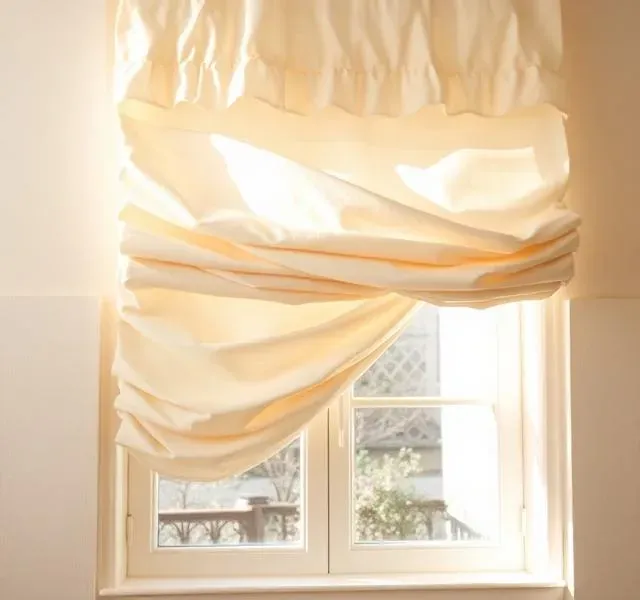
Relaxed roman shades are the most traditional of the common styles. The shade hangs with a characteristic swag at the bottom, creating a soft, draped look that reads as casual and romantic. The swag is created by omitting battens at the bottom of the shade, allowing the fabric to drape naturally between the outside cord channels.
Construction. Relaxed shades use battens in the upper portion of the shade for structure, with no battens in the lower two to three fold spaces. The outer cords pull the sides of the shade up when raised, creating a gentle U-shaped curve at the bottom of the shade that pools the fabric inward.
Aesthetic. Relaxed shades read as traditional, romantic, and casual-formal. They work beautifully in classic residential design, in coastal and farmhouse interiors, and in rooms where a softer hand is appropriate. They do not work in contemporary or minimalist spaces where the swag would read as fussy.
Best rooms. Relaxed roman shades work best in bedrooms, sunrooms, casual living spaces, and traditional kitchens. They pair especially well with printed fabrics, florals, and traditional textiles. For more formal rooms where traditional design is the priority, relaxed shades can work but require careful fabric and styling selection.
Fabric considerations. Relaxed shades benefit from fabrics with soft hand and good drape. Stiff fabrics will not swag naturally and can produce awkward pooling. Linens, soft cottons, and traditional drapery weights all work well. Very heavy fabrics can overwhelm the swag and flatten the effect.
Pattern considerations. Pattern placement on relaxed shades is more forgiving than on flat shades because the swag breaks up the lower portion of the pattern visually. Small-scale patterns, stripes, and textural weaves all work beautifully.
Hand labor. Relaxed shades often benefit from wet-setting after fabrication. The shade is raised and the bottom swag is dampened and allowed to dry in position. This sets the swag shape so the shade maintains its appearance over time. Wet-setting adds a day or two to the fabrication timeline. See Roman Shade Fabrication Timelines for full schedule context.
Hobbled Roman Shades
Hobbled roman shades are the most time-intensive style and the most formal. The shade hangs with continuous teardrop-shaped folds running down the entire face, creating a heavily dimensional look that reads as tailored and traditional. The folds remain fully visible whether the shade is raised or lowered.
Construction. Hobbled shades use closely spaced battens with fabric gathered between each batten to create a cascading fold structure. The folds are permanent and require significant extra fabric compared to flat or soft fold shades. Hobbled construction uses roughly twice the yardage of a flat shade.
Aesthetic. Hobbled shades read as formal, elegant, and traditional. They work in formal living rooms, dining rooms, master bedrooms, and libraries where decorative detail is appropriate. They do not work in contemporary or transitional rooms where the heavy fold structure would feel out of place.
Best rooms. Hobbled roman shades work best in formal rooms where traditional design is central to the aesthetic. Formal dining rooms. Libraries. Master bedrooms in traditional or transitional homes. Sitting rooms with classic furnishings.
Fabric considerations. Hobbled shades need fabrics with enough body to hold the fold structure. Heavier drapery weights, silks, and traditional upholstery fabrics all work beautifully. Lightweight fabrics will collapse under the weight of the folds.
Pattern considerations. Hobbled construction changes how patterns read. The folds compress the pattern visually, so small patterns can look busy and large patterns can look fragmented. Solid fabrics, subtle textures, and simple weaves all perform best.
Hand labor. Hobbled shades are the most labor-intensive of the standard roman shade styles. Fabrication time runs at the upper end of the roman shade timeline range. Budget accordingly.
How to Choose the Right Style
The decision framework for roman shade style is straightforward once the variables are understood.
Modern or minimalist room: Flat roman shades are the default choice. The architectural hand matches the room''s visual language.
Traditional or classic room: Soft fold for most applications, relaxed for casual traditional, or hobbled for formal traditional.
Mixed or transitional room: Soft fold is the safest choice. It works across style directions.
Patterned fabric: Flat or soft fold lets the pattern read clearly. Relaxed and hobbled can fragment patterns.
Solid or textured fabric: Any style works. Hobbled especially flatters solid fabrics with subtle texture.
Budget constrained project: Flat is the most production-efficient. Hobbled is the most costly due to fabric yardage and labor.
Tight timeline: Flat and soft fold fabricate fastest. Relaxed and hobbled add days to the schedule.
For designers who want to see roman shade styles in person before specifying, the Roseworks Westminster workroom maintains samples of each style in multiple fabrics. A workroom visit lets designers evaluate the styles at full scale before committing to a specification.
To explore roman shade specifications for an upcoming project, schedule a workroom consultation. For the complete specification framework, review Custom Roman Shades: The Designer''s Complete Fabrication Guide. For timeline planning, see Roman Shade Fabrication Timelines: What to Expect from Order to Delivery. For motorized integration specifics, review Motorized Roman Shades: Integration Guide for Smart Home Projects.
Every room deserves the right roman shade.
Visit the Roseworks Westminster workroom to see each roman shade style at full scale, in multiple fabrics, before finalizing your specification. Schedule your consultation today.