Fabricating for Window Walls: Seams, Railroading, and Weight
Residential glazing has grown. Twelve foot sliders, corner window walls, and twenty foot great room elevations are ordinary now in Colorado new construction. Fabric has not grown with them. Most decorative goods still arrive between fifty four and one hundred and eighteen inches wide, so every oversized treatment becomes a construction problem before it becomes a design one.
Seam placement is a design decision
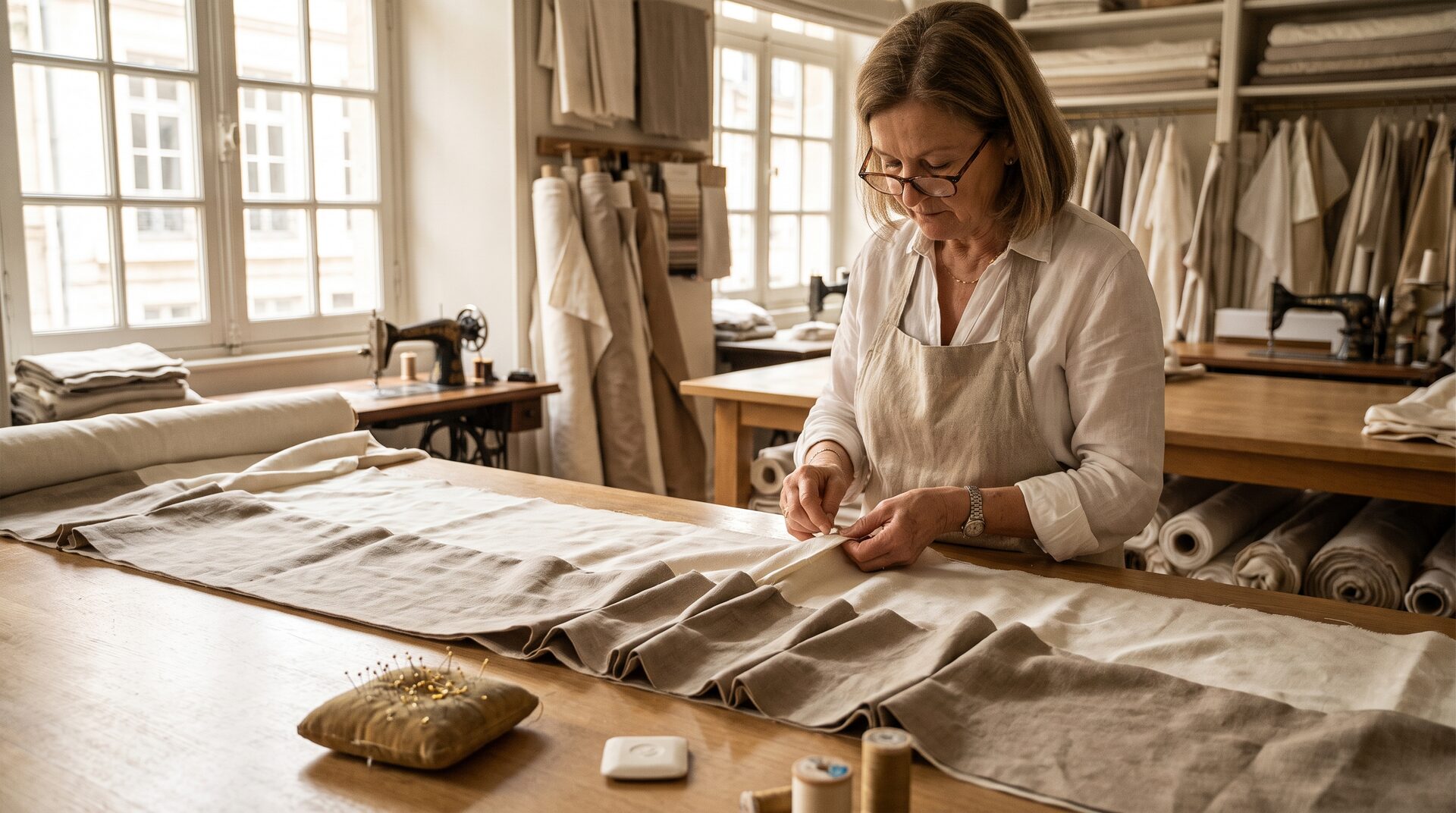
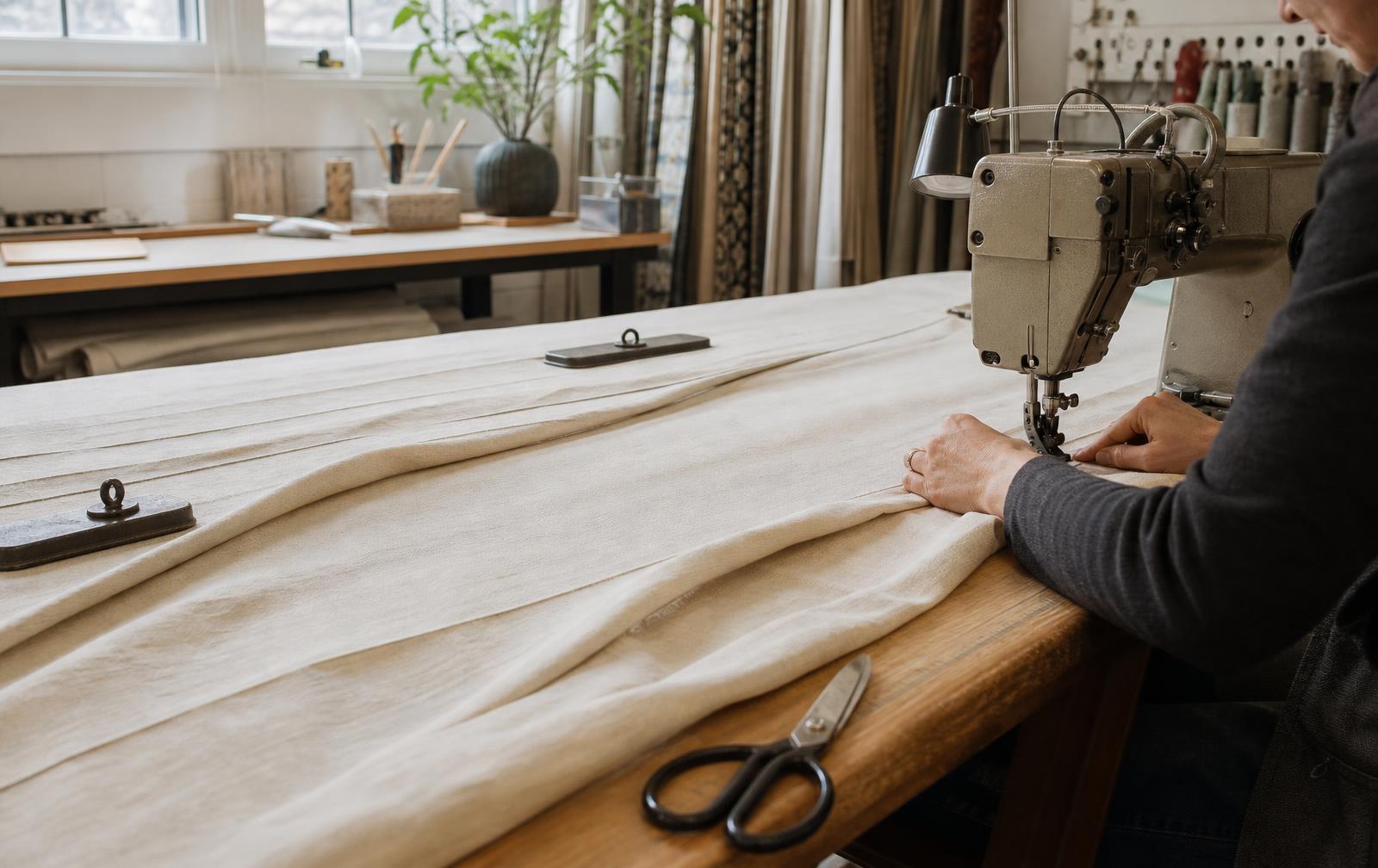
Any panel wider than the goods requires seaming, and where that seam lands changes how the finished drapery reads. Our practice is to place seams at the back of a fold so they disappear in the shadow rather than sitting on a face. That means seam locations are calculated from the pleat layout, not divided evenly across the width. When a client is sensitive to seams, we can adjust fullness slightly to move a seam into a fold, which is a far better solution than apologizing for it later.
Railroading solves some problems and creates others
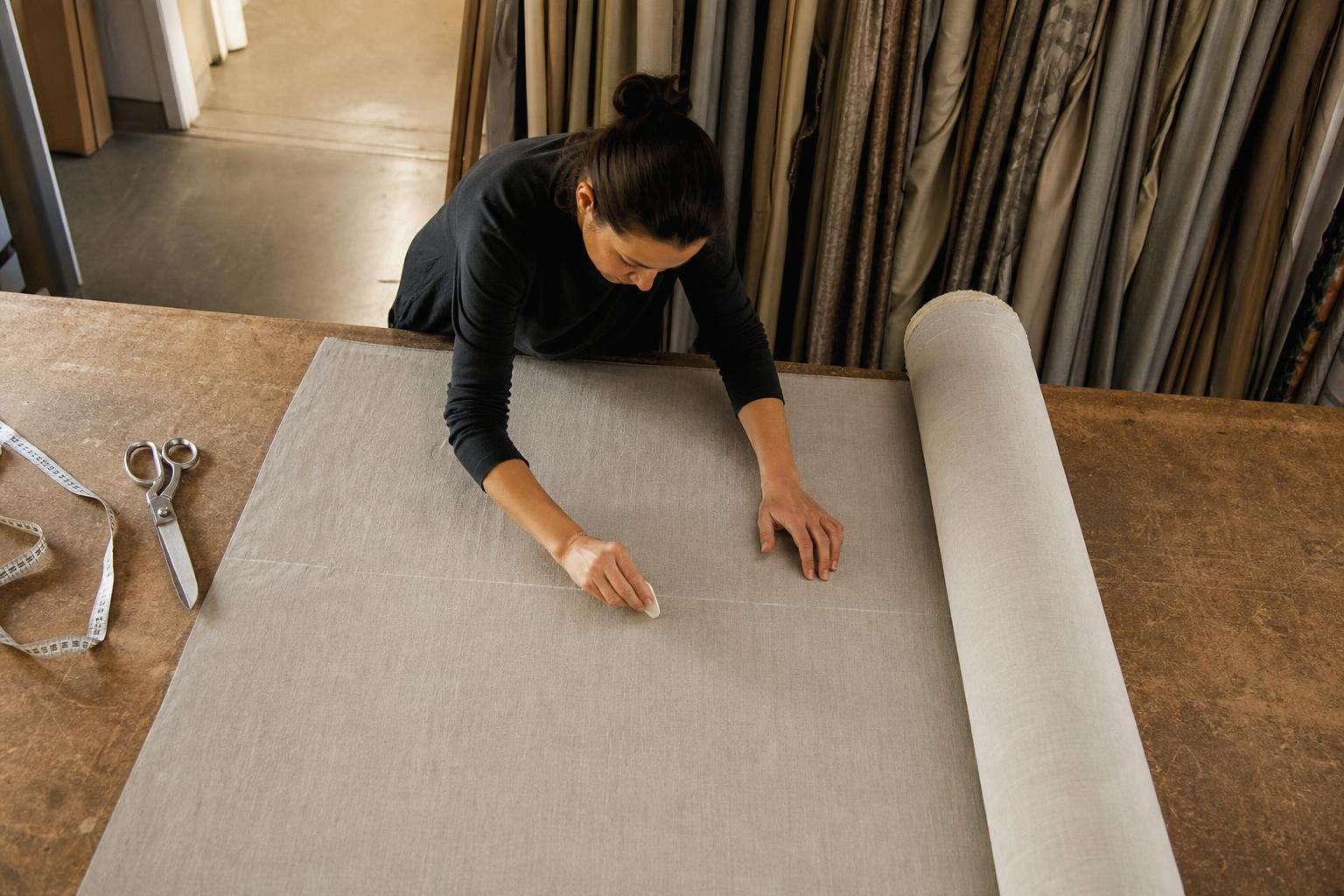
Railroading turns the fabric ninety degrees so the width of the goods becomes the length of the panel, eliminating horizontal seams on very tall treatments. It works beautifully on plains, textures, and non directional weaves. It fails on anything with a directional pattern, a nap, or a vertical stripe that would end up running sideways. It also changes how the fabric drapes, because warp and weft rarely behave identically.
If a project is a candidate for railroading, tell us before the yardage is ordered. Railroaded yardage is calculated differently, and a fabric ordered for conventional cutting is frequently the wrong quantity for a railroaded panel.
Weight, lining, and the hem
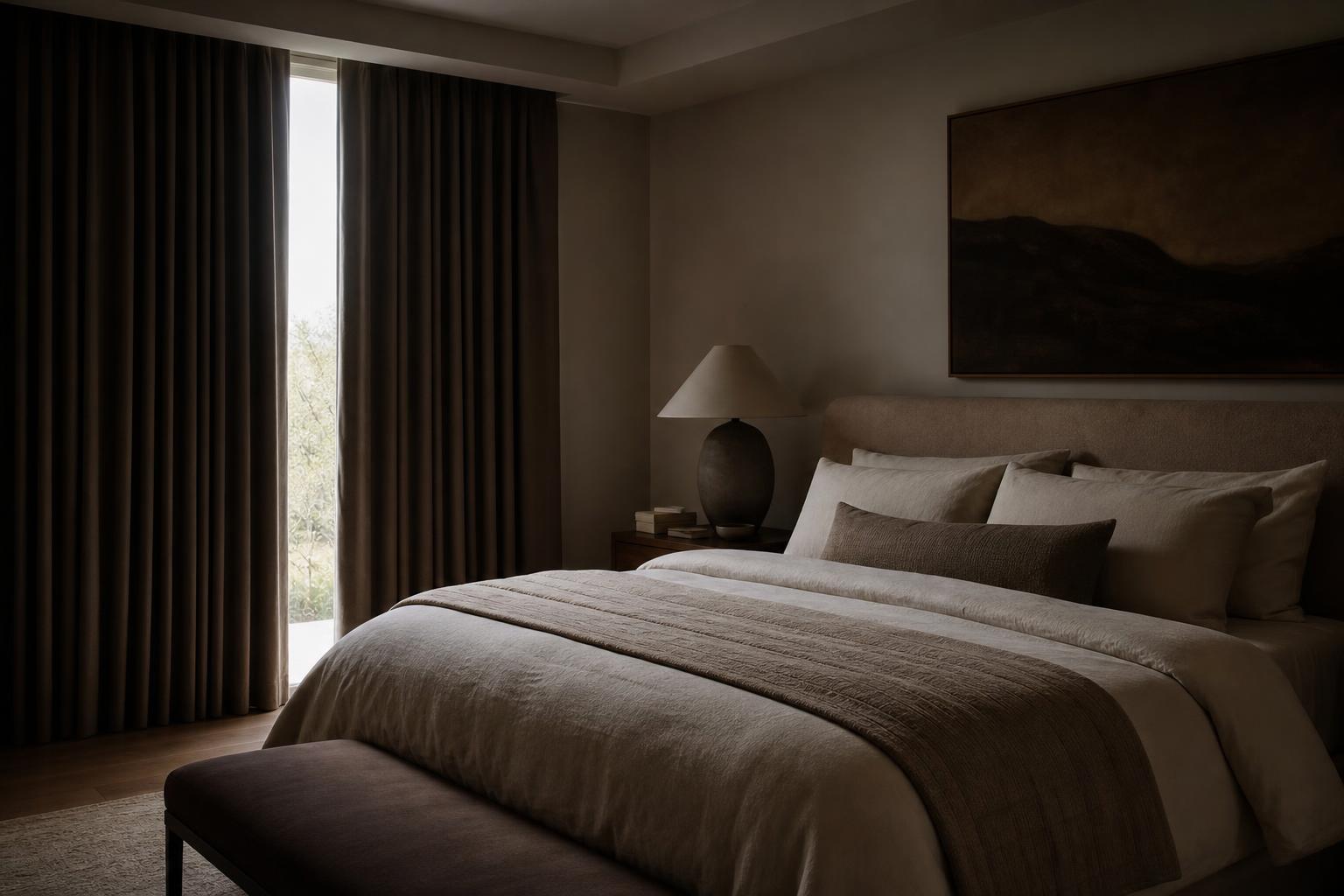
A fourteen foot panel carries real mass. Interlining adds body and helps a tall panel hang plumb rather than swinging, and it improves both insulation and light control on the exposed glass these homes have in abundance. Hem depth increases with length, and chain weight or covered weights become necessary rather than optional. Without weight in the hem, a long panel will move every time the mechanical system cycles, and the client will read that motion as a defect.
Hardware has to carry it
Oversized panels need a track or rod system rated for the load and supported at intervals the manufacturer specifies, not at the intervals that look tidy on an elevation. On motorized runs, confirm the motor is rated for the finished panel weight, including interlining. A motor sized for a sheer will struggle with an interlined velvet, and it will fail slowly rather than obviously.
Measure late and measure the built condition
Window walls are where framing tolerance shows. Floors are rarely level across twenty feet, and ceilings are rarely parallel to them. We measure at multiple points across the opening and fabricate to the built condition, which sometimes means panels of slightly different finished lengths across a single run so the hems appear level to the eye. Field measurement after flooring and hardware installation is not a formality on these projects. It is the entire difference between a treatment that looks custom and one that looks close.
Roseworks Fabrication builds oversized drapery, wide roman shades, and window wall treatments for trade partners across Colorado. Send the elevation and the fabric specification early, and we will resolve seaming, railroading, and weight before the order is finalized.