The Return of the Upholstered Cornice
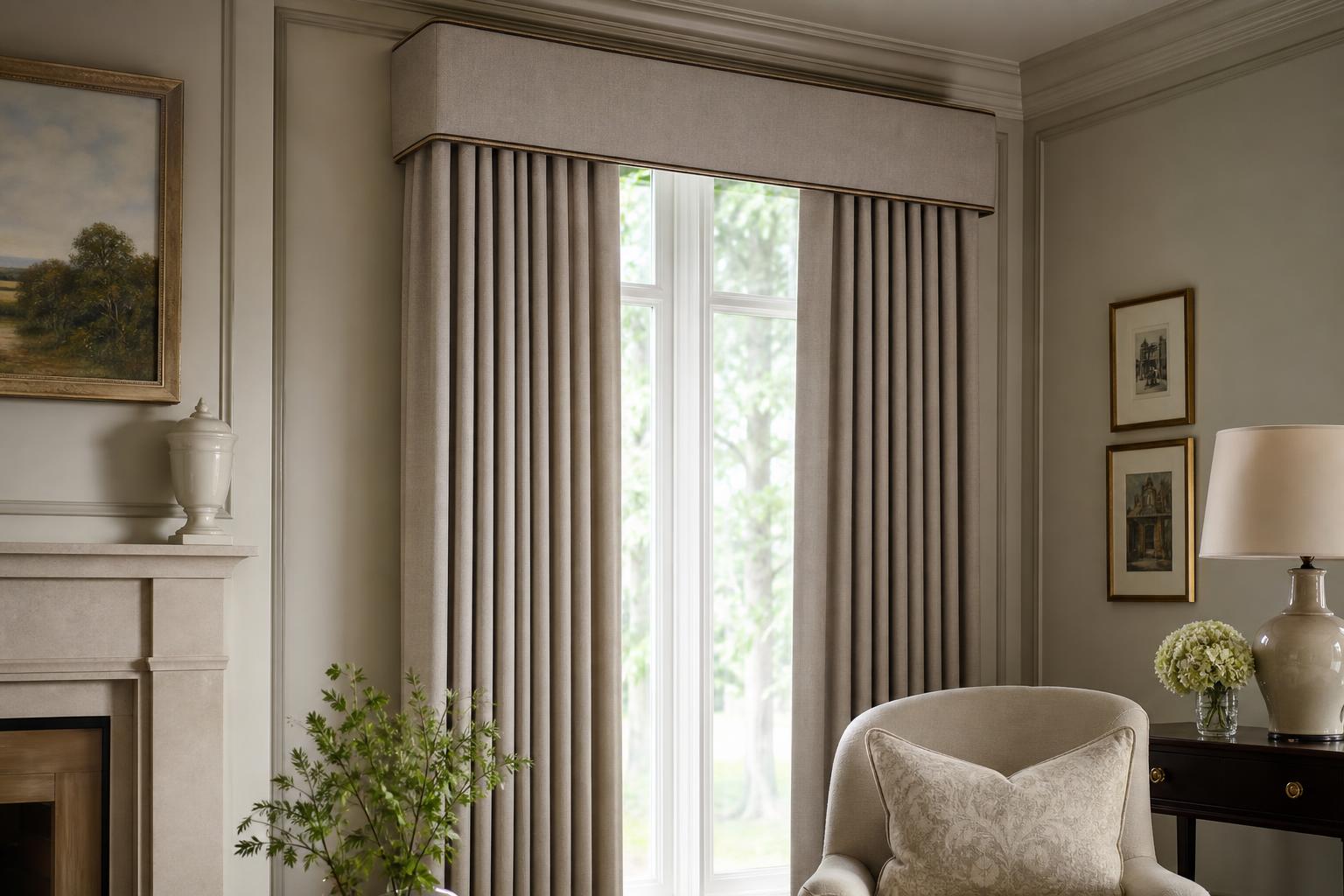
For years the upholstered cornice was shorthand for a decorating era clients wanted to leave behind. That has changed. Designers are reaching for top treatments again, not to add ruffles and swags, but to solve architectural problems and to give a window a finished top edge. The new version is clean, shallow, and tailored.
What a cornice actually solves
- Conceals hardware. Shade rollers, motor head rails, and drapery carriers disappear behind a cornice.
- Corrects proportion. A window that sits too low in a tall wall gains height when the cornice is mounted well above the frame.
- Blocks light at the top. In a blackout bedroom, a cornice closes the gap a fascia cannot.
- Unifies mismatched windows. Openings of different heights on one wall read as a set under a common top line.
Proportions that keep it current
Depth is where dated cornices go wrong. Keep the face shallow, generally six to ten inches for a standard ceiling and up to fourteen inches on a very tall wall, with a projection just deep enough to clear the hardware behind it, usually four to six inches. Straight bottom edges read modern. Shaped and scalloped bottoms read traditional and should be a deliberate choice rather than a default.
Detail choices that carry the look
A self welt on the top and bottom edge gives a crisp line. A contrast welt in a deeper tone frames the treatment and coordinates with pillows or upholstery elsewhere in the room. Nailhead trim, applied tape, or a leather edge band all read as tailored when used once, and as busy when used together. Choose one gesture.
Fabrication matters more than fabric here
A cornice is a structural object. It needs a properly braced frame, correct batting so the face is smooth rather than lumpy, and pattern matching across the face and returns. Sloppy corners are visible from the whole room. This is a treatment where workroom quality shows immediately.
Frequently asked questions
Cornice or valance? A cornice is upholstered over a rigid frame. A valance is soft fabric. A cornice gives crisper lines; a valance gives softness and movement.
How high should a cornice mount? Typically two to six inches above the window trim, or higher to gain apparent ceiling height.
Can a cornice hide a motorized shade? Yes, and it is one of the cleanest ways to conceal a head rail. Confirm projection so the roll clears the back of the frame.