How Roseworks Fabrication Supports Trade Professionals from Specification to Install
The gap between a window treatment specification and a finished installation is where projects succeed or fail. A clean spec sheet does not guarantee a clean install. A skilled designer cannot overcome a workroom that drops the handoff. Every step between the two requires careful coordination, clear communication, and a production partner who understands that the designer''s reputation is on the line with every panel that leaves the workroom.
Roseworks Fabrication built its trade services around this reality. Every step of the process is designed to support the trade professional, reduce friction at the handoffs, and deliver installations that reinforce the designer''s credibility with the client. This post walks through that process in detail, from the first project inquiry to the final installation checkpoint.
For designers, architects, and builders who are considering Roseworks as a fabrication partner, this is a concrete look at what working with the workroom looks like in practice. For the broader framework on workroom partnerships, see the Interior Designer''s Guide to Partnering with a Custom Fabrication Workroom.
Phase One: Project Inquiry and Initial Scope
Every project begins with an inquiry. A designer calls, emails, or submits a project through the Roseworks order form. The inquiry typically includes project scope, rough square footage or number of windows, fabric direction if known, and timeline expectations.
Roseworks responds within 48 hours. The response is not a templated acknowledgment. It is a direct conversation with the team member who will oversee the project. This person becomes the designer''s single point of contact for the entire engagement.
During the initial conversation, a few things get established. The scope of fabrication required, including drapery, roman shades, valances, pillows, bedding, or upholstery. The designer''s timeline, including any known client milestones such as move-in dates or professional photography shoots. The designer''s prior experience with custom fabrication, which calibrates how much guidance Roseworks will provide versus simply executing a confident specification.
For new trade partnerships, this initial conversation often includes a workroom visit invitation. Designers are welcome to tour the Westminster facility, meet the fabrication team, and see representative work before committing to a project. Read more about the workroom and team. For established relationships, the initial conversation usually moves directly to the next phase.
Phase Two: Specification Review and Quote
Once scope is established, Roseworks requests a complete specification package. For drapery, this includes fabric selection with yardage, lining type, header style, fullness ratio, finished dimensions, hardware specification, and any custom finishing details. For roman shades, it includes fabric, lining, shade style (flat, soft fold, relaxed), lift system (cordless, motorized), mount type, and dimensions. For other soft goods, the equivalent specification details.
The Roseworks team reviews every specification before quoting. This review is not a formality. It is where problems get caught before fabrication begins.
Common issues identified during spec review include fullness ratios that do not match the header style, lining selections that will change the panel weight beyond the hardware''s load capacity, finished dimensions that will not stack properly within the window opening, and fabric selections that have known shrinkage behavior that will affect finished length. When any of these issues appear, the Roseworks team flags them to the designer with a recommendation and a choice. The decision stays with the designer. The information gets surfaced before fabric is cut.
The quote returns within 48 hours of complete specification submission. The quote includes line-item pricing for fabrication, hardware, and any additional services such as measurement, templating, or installation. Pricing is transparent. There are no hidden upcharges that appear after fabrication begins. For more on pricing structure and COM policies, see Trade Pricing, COM Policies, and How to Get Started with Roseworks.
Phase Three: Fabric Receipt and Verification
For COM fabrication, the designer ships or delivers fabric directly to the Roseworks workroom. Upon receipt, every bolt is inspected for dye lot consistency, flaws, and usable yardage against the specified requirement.
This inspection happens before cutting begins. If a fabric has a dye lot variance that will affect the finished panels, the Roseworks team photographs the variance and notifies the designer before proceeding. If a bolt has flaws that will reduce usable yardage below the specified requirement, the designer is notified with a recommendation for how to proceed.
This verification step prevents the single most common source of finished-project complaints. A client who sees a dye lot variance between panels, or an unexpected flaw in a visible location, does not blame the fabric mill. The client blames the designer. Catching these issues at fabric receipt protects the designer from inheriting a problem that originated upstream.
For fabric sourced by Roseworks directly, the verification step is handled before the designer sees the fabric. Approved material moves straight to cutting.
Phase Four: Fabrication and Quality Control
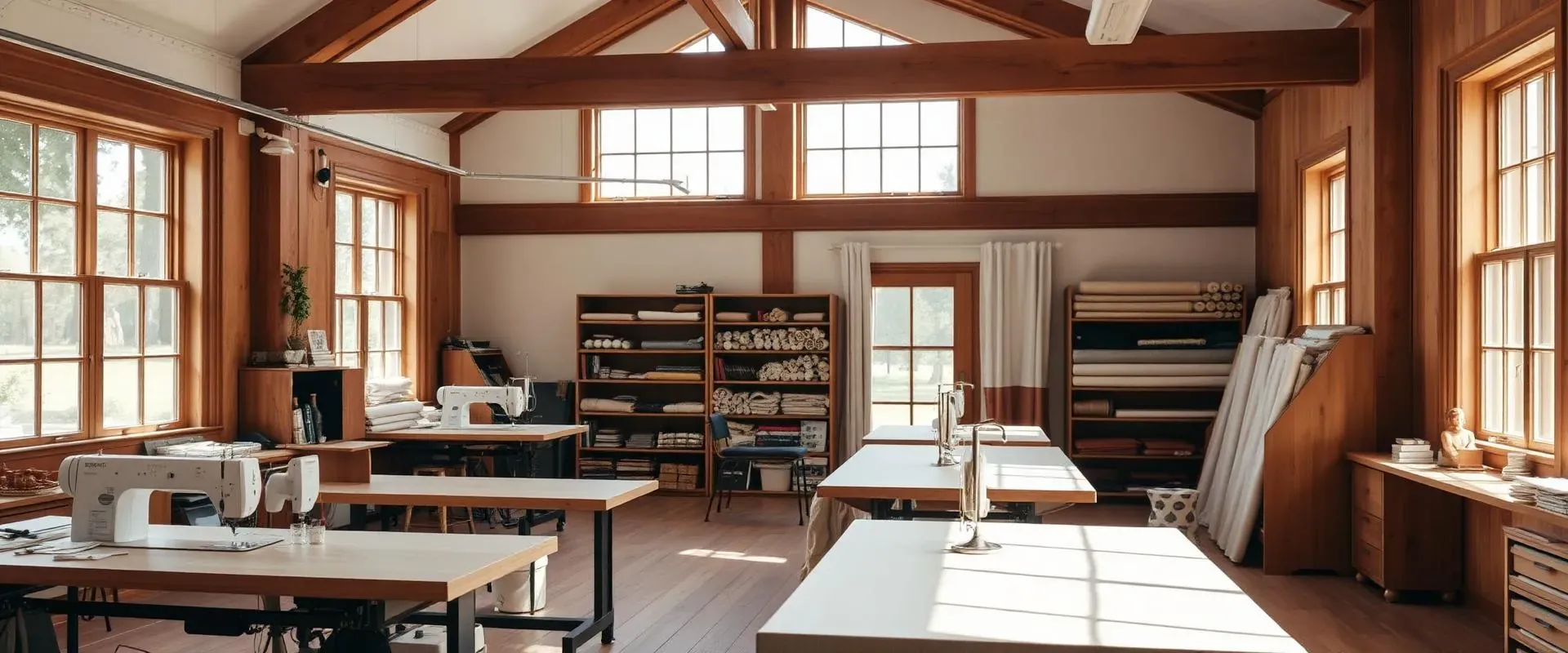
With verified fabric and approved specifications, fabrication begins. Roseworks operates a dedicated Westminster workroom staffed by experienced drapery, shade, and upholstery fabricators. Every step happens within a single facility, which is one of the structural reasons designers choose a local workroom over national manufacturers.
Cutting. Sewing. Lining. Finishing. Hardware integration. Motorization programming when specified. Final pressing. Every step is documented against the project specification sheet.
Quality control is continuous. Panels are inspected during fabrication, not just at the end. Seams are reviewed for consistency. Hems are checked for accuracy. Pleats are verified for uniform spacing. Roman shade lift systems are functionally tested before the shade leaves the cutting table.
For projects with tight timelines, Roseworks provides mid-project status updates. Designers know where their project is in the production queue, when fabrication will complete, and when the finished product will be ready for pickup or delivery.
Phase Five: Handoff to Installation
The handoff from fabrication to installation is the most underestimated risk point in custom window treatments. A panel that was perfect at the workroom can fail at installation because of a hardware mismatch, a measurement error, or an on-site issue that the installer was not prepared for.
Roseworks supports installation in two ways, depending on the project.
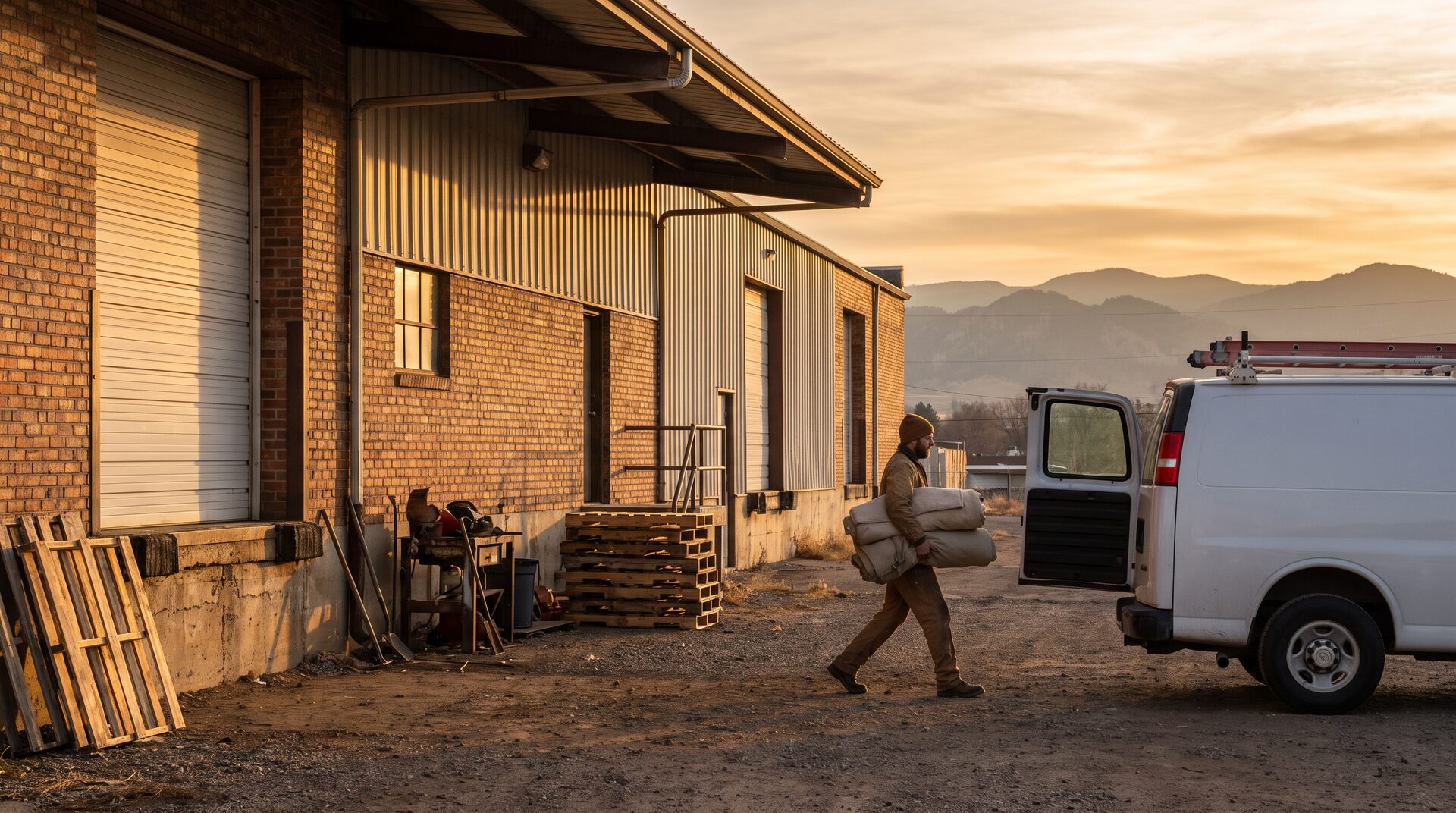
For designers who coordinate installation directly, Roseworks provides complete documentation with the finished product. Hardware lists. Hanging instructions. Photographs of how panels are expected to be stacked and pleated. A point of contact at the workroom if the installer has field questions. See our drapery hardware services for the supporting hardware scope.
For projects where Roseworks coordinates installation through Blinds Couture''s install team or an approved installer network, the workroom and the installer communicate directly. The designer does not become the messenger between fabricator and installer. Issues are resolved within the production chain without the designer having to coordinate between parties.
When an issue arises during installation, Roseworks responds in real time. A panel that needs to be shortened. A hardware clip that is the wrong size. A motorized track that needs reprogramming. The workroom is 20 minutes from most Denver installations. Problems get solved the same day when possible.
Phase Six: Project Closeout and Follow-Up
After installation, Roseworks follows up with the designer to confirm the project was completed to specification. Any remaining open items are documented and tracked to resolution. Photographs of the finished installation are archived in the designer''s project history for future reference.
For designers building long-term partnerships with Roseworks, this closeout documentation becomes a library of past specifications, fabric selections, hardware choices, and finishing details. Future projects can reference this history directly, which accelerates specification and reduces the risk of miscommunication on repeat patterns.
The Support Behind the Support
The process described above is the visible surface of Roseworks'' trade support. Behind it is a set of commitments that shape every step.
Response times are measured in hours, not days. Quotes come back within 48 hours. Project questions get answered the same day. Field issues get addressed in real time.
Decisions stay with the designer. Roseworks flags issues and recommends solutions, but the specification authority remains with the trade professional. The workroom executes, it does not override.
Problems get solved, not blamed. When something goes wrong, the focus is on fixing the outcome, not protecting the workroom''s record. That orientation is what long-term trade partnerships are built on.
To start a project with Roseworks, submit a project inquiry. For the broader context on what a healthy workroom partnership looks like, review the Interior Designer''s Guide to Partnering with a Custom Fabrication Workroom. For specifics on trade pricing and COM policies, see the Trade Pricing, COM Policies, and How to Get Started with Roseworks post.
Support built around the trade professional.
From first inquiry to final installation, Roseworks Fabrication backs the trade partner at every step. Submit a project inquiry to start your next project with a workroom that understands what is at stake.